
NYC Renting Guide
The US renting process, step by step
Quick answer
Renting in the US is mainly 7 steps:
- Define your needs and budget
- Research neighborhoods
- Filter your channels
- Tour and verify
- Submit an application
- Sign and pay
- Do a move-in inspection
01
Process overview
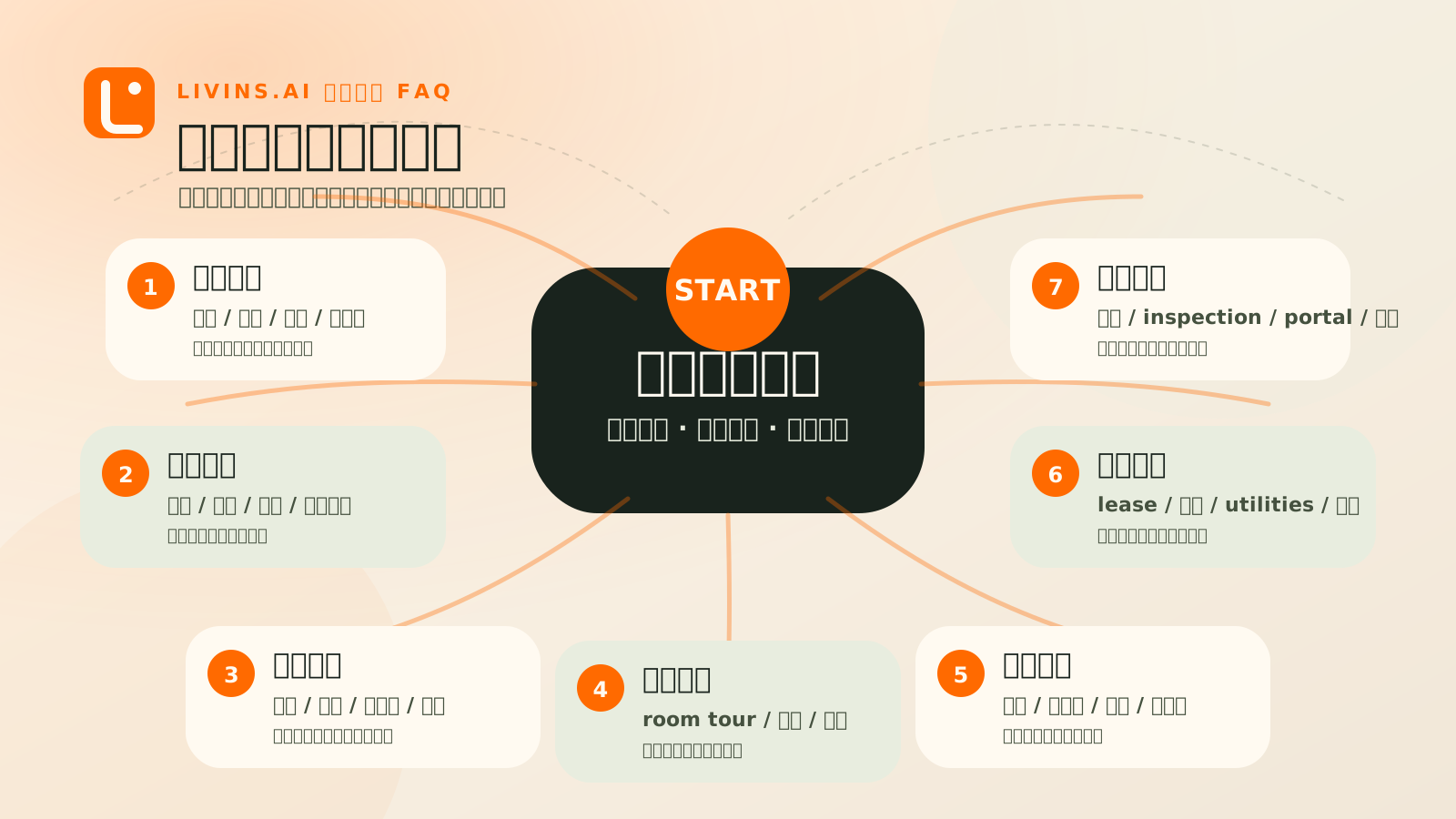
1. Define your needs: budget, lease term, layout, and other priorities
Related: What types of rental housing are there in the US?Write down your non-negotiables first, then make trade-offs. Budget, commute, layout, and roommates directly decide which apartments you can look at.
- Set the lease term: short-term, a 12-month lease, and whether you may renew.
- Set the budget: count rent, deposit, application fee, broker fee, and utilities together.
- Set the layout: studio, 1B1B, a share, or flex.
- Set roommates: who signs the lease and who is responsible for bills.
- Set priorities: commute, quiet, light, in-unit laundry, pets, or parking.
2. Research neighborhoods
Related: How do you choose a neighborhood and commute in NYC?Start area selection from the transit line, then look at your daily radius. Close to school is not always good to live in, and the late-night route matters too.
- Check the commute: look at the morning rush, evening, and weekends.
- Check the daily radius: grocery, pharmacy, dining, laundry, and package pickup.
- Check safety: use the crime map, street view, school groups, and an in-person route together.
- Check the building: do not ignore age, soundproofing, pests, and access control.
3. Listing channels: platforms, school groups, leasing offices, and sublets
Related: Which rental websites and channels can international students trust?Public platforms are good for prices and layouts; school groups are good for roommates and short-term bridges; in NYC, also focus on StreetEasy, building websites, and leasing offices.
- Platforms: StreetEasy, Zillow, Apartments.com, building websites.
- Community: school housing office, CSSA, alumni groups, Facebook / Reddit.
- Sublets: confirm whether a sublease is allowed and whether written consent is needed.
- Brokers: confirm whether the broker represents the landlord or the tenant, and whether they charge a fee.
4. Touring and verification
Related: How can you do an NYC room tour from abroad without getting burned?A tour is not only about the room. Common areas, the block-level route, and fee rules also decide how comfortable you will be.
- The room: doors and windows, light, water pressure, heat/AC, kitchen appliances, and signs of pests.
- Inside the building: elevator, laundry, package room, trash room, access control, and hallway smell.
- Ask about fees: rent, deposit, application fee, broker fee, move-in fee, amenity fee.
- Ask about rules: pets, subletting, guests, living-room partitions, early termination, and renewal.
5. Submitting an application and screening
Related: What documents do you need to apply to rent in NYC?Apply only after confirming the listing and fees. In NYC, standard application/credit/background-check fees are usually capped at $20; condo/co-op board package or other fees should be looked at separately.
- Common documents: passport, visa/I-20, admission letter, bank statements, guarantor materials.
- No US credit: you may need a guarantor, a third-party guarantee service, or stronger proof of funds.
- Application fee: not the same as a deposit, and usually non-refundable if you change your mind.
- Submission channel: use only a trusted portal, the management company website, or a verifiable channel.
6. Signing and paying: confirm the full lease before paying real money
Related: Which lease terms should you focus on before signing?Only after approval do you move to the lease and payment. Before you sign, read the amounts, the payee, and the exit rules carefully.
- Who you sign with: confirm whether it is the landlord, management, or a private landlord.
- Payment items: rent, deposit, amenity fee, parking, utilities.
- Key clauses: auto-renewal, early termination, sublet, insurance, late fee.
- Payment records: keep receipts, and pause if the payee does not match.
7. Before and after move-in: insurance, utilities, and the move-in inspection
Related: What should you photograph, note, and keep as evidence at move-in inspection?Signing the lease is not the end. Before moving in, confirm insurance, utilities, keys, the elevator, and the portal; do a move-in inspection on move-in day.
- Photos and video: record the whole unit before moving furniture in.
- Submit the record: send existing damage and issues to management.
- Confirm utilities: check the lease for electricity, gas, internet, water, trash.
- Upload insurance: upload renters insurance as required if needed.
02
Watch out for
- Fees vary across the US; in NYC, standard application / credit / background-check fees are usually capped at $20.
- Confirm gross rent, any concession, the renewal price, and what you actually pay each month.
- High-risk signals when renting remotely include: refusing a live video, rushing you to make a non-refundable payment, a payee that does not match the lease party, a vague fee list, and a broker whose identity cannot be verified.
- Verify condo/co-op, flex rooms, private landlords, prepaid rent, and lease takeovers item by item.
- Any verbal promise — free months, repairs, furniture, pets, subletting, early move-in — should be written into the lease, a rider, or an email.
Next step
If you have more questions about renting in NYC, Livins.ai offers free rental guidance and listing recommendations to help you move in with confidence.
Talk to Livins03
Questions
- Is the renting process the same everywhere in the US?
- The overall flow is similar — search, tour, apply, screen, sign, pay, move in. But fee caps, broker fees, application documents, deposit rules, and building requirements differ by location.
- When do you usually pay the application fee?
- Usually when you formally apply. In NYC, standard application / credit / background-check fees are usually capped at $20; a condo/co-op board package, move-in fee, amenity fee, etc. are looked at separately by their nature.
- Can you sign a lease while still abroad?
- Yes, but you must do a live room tour, identity verification, a fee list, and a formal lease review.
- What is the first thing to do after signing?
- Confirm renters insurance, utilities, the resident portal, your move booking, keys/access, the elevator, and the move-in inspection. On move-in day, send photos, video, and an issues list to management to keep on record.
- Coming to the US for the first time, which step is easiest to miss?
- The easiest to miss are the fee list and the move-in inspection. Before applying, ask about rent, deposit, broker fee, move-in fee, utilities, insurance, and parking; at move-in, take photos and video to avoid deposit disputes when you leave.
Sources
- China Consular Service Network: US housing information
- Dealmoon: US renting guide
- NY Attorney General: Residential Tenants' Rights Guide
- NYC DCWP: FARE Act and Broker Fees
- NYC HPD: Tenant Bill of Rights
Last updated 2026-05-01.